Irish Seisiún Newsletter


 This just in…..
 This just in…..
Bob Murphy has given up the fiddle.
Click here for details, and click the speaker for sound…
And the back arrow to return here

This Week’s Session 3
Everyone played hooky today
There was no session.
.
All that laziness will soon end….
When Pat and I get back down there!
Find out what’s happening at Tim Finnegan’s this month.
.
Click here to view calendar
Finnegan’s supports us…Let’s support them!


Click either link to visit the site

.
 “That’s How I Spell Ireland”
Saturdays at 7 to 8 PM EST.
You can listen on 88.7FM or WRHU.org.
For a request please text me on 917 699-4768.Kevin and Joan Westley
Note: Show will be preempted whenever the NY Islanders have a Saturday game
Old Ireland
Recent Mail

Travel in Ireland

Relax with your loved ones this fall
at the Heritage, the ultimate getaway in County Laois
Escape to The Heritage, set in the heart of the pretty village of Killenard in Co Laois, and make unforgettable memories with friends and family with their Bubbles & Bliss package.

This fall, enjoy a getaway with your dearest friends in the surroundings of Ireland’s Ancient East at The Heritage Hotel & Spa in Co Laois.
Heading to Ireland to catch up with friends and family? Escape to The Heritage and make unforgettable memories together with their Bubbles & Bliss package.

The Heritage, Co Laois
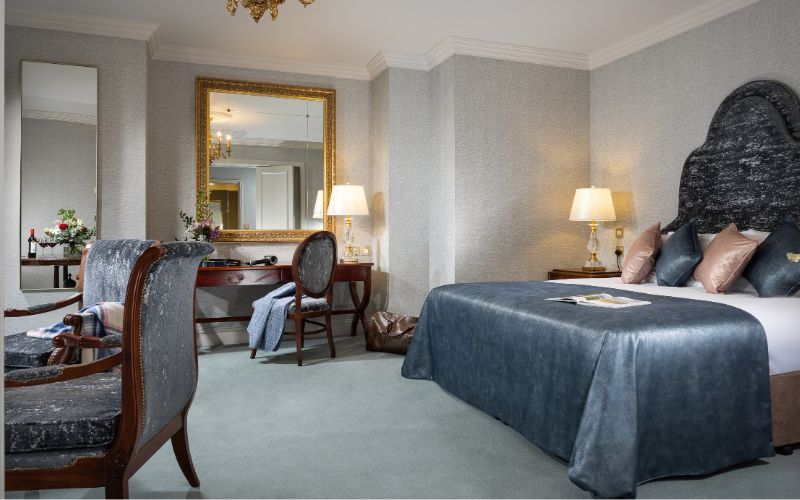
Arrive at The Heritage, a beautiful resort set in the heart of the serene countryside in the pretty village of Killenard in County Laois, just over an hour’s drive from Dublin, and check into one of their new group suites for up to six guests, where you’ll be greeted with a bottle of bubbles on arrival.
Sip away in your private sitting room, and admire the two beautifully designed bedrooms adjoining either side, where you’ll be retiring for a restful night’s sleep.
The Heritage, Co Laois
Catch up with the gang before heading down to the spa, where you can relax with a 30-minute pampering ESPA treatment and have time to explore and experience the thermal suite.
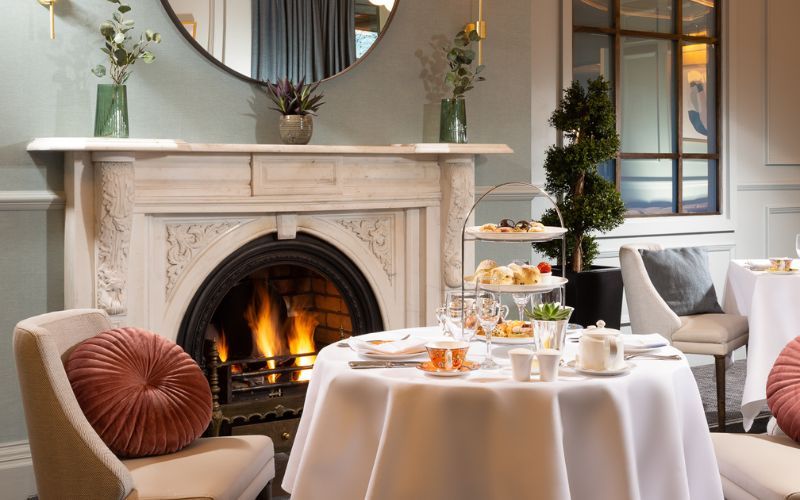
When you’re fabulously relaxed and revitalized, head for the bar where you and your group can enjoy a pre-dinner cocktail and an unforgettable dining experience in Blake’s with a three-course meal, where you’ll find lots of fantastic local Laois producers on the menu.

The Heritage, Co Laois
Finish off your evening with your favorite movie, popcorn, and a glass of wine in their in-house cinema, or curl up on the sofa in your suite and enjoy a movie night hamper delivered to your room.
After an eventful night, make the most of a late check-out the following day with breakfast, and a chauffeur-driven trip to Kildare Village with 10% discount cards to use. This really is the ultimate getaway to enjoy with your cherished friends!
The Heritage, Co Laois
Rates start from €1,494 per night or €249 pps (based on 6 guests) and include a 30-minute spa treatment and access to the spa experience, Champagne on arrival, pre-dinner cocktail, three-course dinner in Blake’s, cinema access or movie night hamper to the room, late check-out, chauffeured drive to Kildare village and 10% discount cards each.
Book today at theheritage.com. Follow The Heritage on Facebook and Instagram.
* This article was originally published in 2024 and updated in Sept 2026.
Irish Language
Tír gan Teanga, Tír gan Anam:
A land without a language is a land without a soul.


“Labhair í agus mairfidh sí” means “Speak it and it will live.” It’s a simple reminder that Gaeilge stays alive when ordinary people use it every day.
You don’t need to be fluent—just start with a few words.
Say Dia duit instead of hello, Go raibh maith agat instead of thank you, wish someone Slán abhaile, or celebrate a great score by your local team with Cúla búla!
Every Irish word spoken is another small step towards keeping Gaeilge alive for future generations.
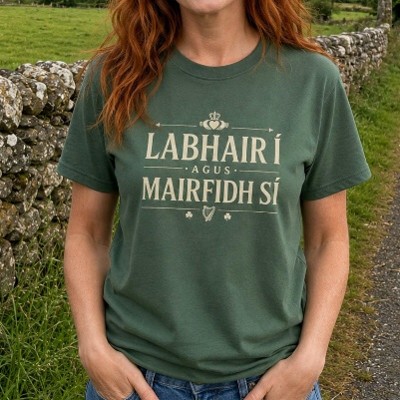
Labhair is not to be confused with the Irish word for book, which is leabhair, pronounced the same way. Low-er
I recommend the free Irish workshop, which is held the first Sunday of every month through the link https://letslearnirish.com I myself usually attend every month and really enjoy it. Bainim sult as (ban-im sult oss)!.
Is e an cleachtadh a dheanann maistreacht (iss eh on clach-too ah yen-inn mawsh-tracht). Practice makes perfect!
In addition to the free monthly workshops, they have many courses and resources available for all levels.
Biodh seachtain aoibhinn agaibh. Have a great week.
Slan agus beannnacht.
Anita
Free Irish Classes
The classes are over zoom and are held at 12:00 eastern time the 1 st Sunday of every month.
It is basic conversational Irish and open to learners of all ages, especially beginners.
All are invited.
Hope to see you there!
slan go foill.
Le dea ghui,
Anita
click here to register

This week’s Irish Recipe
These Baileys Irish cream cheese swirl brownies are pure indulgence
A marbled, chocolatey treat gets a boozy Irish upgrade with a Baileys glaze on top.

Chocolate and Baileys Irish Cream are already a dream pairing, but this recipe takes things a step further by swirling a Baileys cream cheese mixture right into the batter. Finished with a Baileys glaze brushed on while warm, these brownies are a rich, grown-up dessert worth making again and again.
Here at IrishCentral, we’re big fans of both Baileys Irish Cream and dessert, so this recipe that seamlessly merges the two is one of our favorites!
Baileys Irish cream cheese swirl brownies recipe
Ingredients:
For the swirl:
- 3 ounces cream cheese, room temperature
- 2 tbsp unsalted butter, room temperature
- 1/4 cup sugar
- 1 large egg
- 1 tbsp all-purpose flour
- 2 tbsp Bailey’s Irish cream
For the brownies:
- 6 ounces sweet baking chocolate (I used semisweet), chopped
- 3 tbsp unsalted butter, room temperature
- 1/2 cup sugar
- 2 large eggs
- 1/2 cup all-purpose flour
- 1/2 tsp baking powder
- 1/4 tsp salt
- 2 tsp vanilla extract
- 1 cup semisweet chocolate chips
For the glaze:
- 4 ounces of sifted powdered sugar
- 1 tbsp Bailey’s Irish Cream
- Milk to thin out (amount will vary)
Method:
- Preheat oven to 350°F. Lightly butter an 8-inch square nonstick baking pan. Using an electric mixer, beat cream cheese and butter in a medium bowl until light and fluffy. Gradually add sugar and beat until well blended. Beat in an egg. Mix in flour, Irish Cream, and vanilla. Set the mixture aside.
- Stir baking chocolate and butter in a heavy small saucepan over low heat until smooth. Cool slightly. Using an electric mixer, beat sugar and eggs in a large bowl until slightly thickened, about 2 minutes. Mix in flour, baking powder, and salt. Mix in chocolate mixture and extracts. Stir in chocolate chips.
- Spread half of the chocolate batter (about 1 1/4 cups) in prepared pan. Using a rubber spatula, spread the cream cheese mixture over the chocolate batter. Spoon the remaining chocolate batter over top of cream cheese mixture. Using the tip of a knife, gently swirl through the batter, forming a marble design. Bake brownies until the tester inserted into the center comes out with a few moist crumbs attached, about 30 minutes.
- Make glaze. Combine powdered sugar and Irish cream. If too thick thin out with milk.
- While still warm brush (using a pastry brush) glaze over brownies. Let sit for 15 minutes. Cut into squares.
H/T: Culinary Concoctions by Peabody.
*Originally published in 2013, updated in 2026.
Poem of the Week

On Raglan Road
By Patrick Kavanaugh
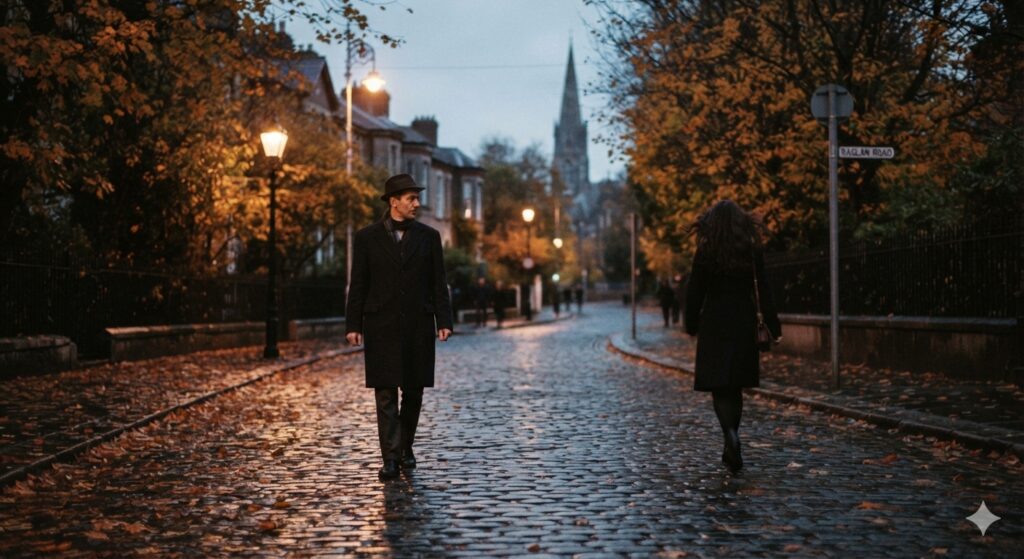
On Raglan Road on an autumn day I met her first and knew
That her dark hair would weave a snare that I might one day rue;
I saw the danger, yet I walked along the enchanted way,
And I said, let grief be a fallen leaf at the dawning of the day.
.
On Grafton Street in November we tripped lightly along the ledge
Of the deep ravine where can be seen the worth of passion’s pledge,
The Queen of Hearts still making tarts and I not making hay –
O I loved too much and by such and such is happiness thrown away.
.
I gave her gifts of the mind I gave her the secret sign that’s known
To the artists who have known the true gods of sound and stone
And word and tint. I did not stint for I gave her poems to say.
With her own name there and her own dark hair like clouds over fields of May
.
On a quiet street where old ghosts meet I see her walking now
Away from me so hurriedly my reason must allow
That I had wooed not as I should a creature made of clay –
When the angel woos the clay he’d lose his wings at the dawn of day.
.
The Story of “On Raglan Road” –
Lyrics written by Patrick Kavanagh,
Performed by Luke Kelly [1978]
Stories and Tales
Another special musical treat
Click to play, then click the speaker for sound, then click the back arrow to return.
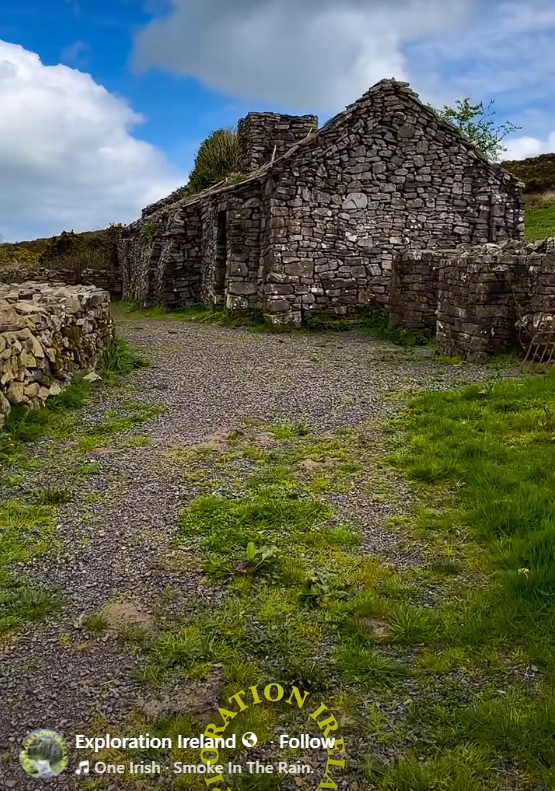
The Irish monk Germans still credit for their wine industry
As Germany marks the feast day of St. Disibod on September 8, winemakers along the Nahe River still trace their craft back to a 7th-century missionary from Ireland.

Long before Riesling made Germany’s name in wine, legend says an Irish monk pushed his walking staff into a hillside above the Nahe River and watched wine begin to flow from it. Nearly 1,400 years later, that hillside is still producing grapes, and German wine lore still gives the credit to a saint from Ireland.
Saint Disibod was born around the year 619 into a minor chieftain’s family in Ireland. He was ordained a priest at 30 and later elected bishop, but his strict reforms made him enemies among local clergy. Around 653, he was forced from his post and left Ireland altogether, sailing for the continent with a small band of companions in search of a place more open to his monastic ideals.
He found it at the meeting point of the Nahe and Glan rivers in what is now Rhineland-Palatinate, according to the Germany Glossary of Wine (Wein,plus). Plus, legend held that Disibod had been shown the spot in a dream, described only as “where two rivers meet,” and he recognized the confluence when he arrived.
Findthesaint.com adds a more colorful detail, noting that local legend credits a deer with digging up a fresh spring at the site, sealing its selection as a place of prayer and settlement.
It is the next part of the story that gives Germany’s wine industry its Irish origin myth. Wein.plus’s profile of the modern Weingut Disibodenberg winery states that when the exhausted monk drove his walking stick into the ground on the mountainside, legend has it that the wood took root and sprouted into a vine on the spot. German tradition has run with that image ever since, crediting the wandering Irish missionary with planting the seed, quite literally, of the region’s wine culture.
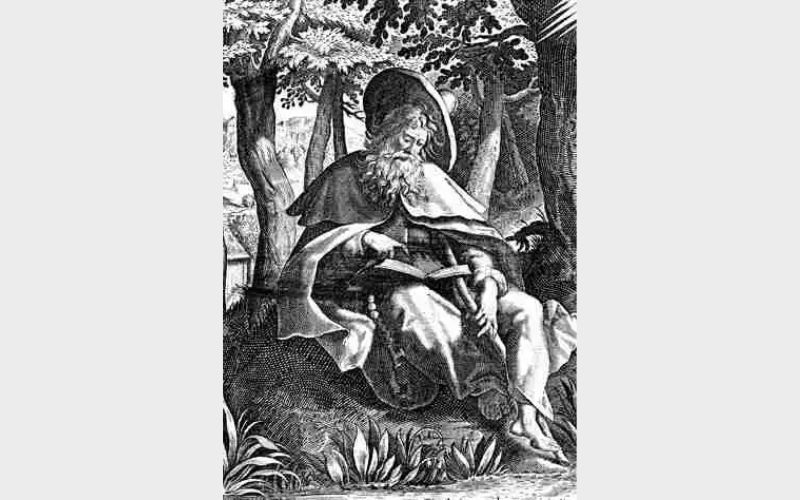
Whatever its mythical origins, the vineyard on Disibodenberg has a documented history stretching back centuries. Wines of Germany, the trade group representing the German wine industry, reports that traces of vines on the hill’s southern slope show the cloister vineyards have been farmed continuously since at least the 11th century, and the wine estate has been owned by the von Racknitz family since 1753. In 2008, the same source reports that workers discovered five surviving grapevines of the White Orleans variety, long thought extinct in Germany, tangled feral into an old wall. Research suggested they were probably the oldest grapevines in the country, likely dating to sometime between 1108 and 1559, when the monastery on the hill was active.
That monastery grew up after Disibod’s death, eventually becoming a Benedictine house in 1108. Its most famous resident was not Disibod himself but Hildegard von Bingen, who entered as a young nun in 1112 and stayed for four decades before becoming one of medieval Europe’s most celebrated mystics, composers, and healers. Wines of Germany notes that Hildegard wrote extensively about wine in her herbal medicine texts, praising pure wine for its power to cleanse and strengthen the blood of anyone who drank it. It was Hildegard, writing around 1170, who first set down Disibod’s life story in her Vita Sancti Dysibodi, the main source for what little is known about him today.
Findthesaint.com records that Disibod died on July 8 in the year 700, though several traditions place his death on September 8 instead, which has become his feast day. St. Boniface, the missionary bishop known as the Apostle of the Germans, presided over the transfer of Disibod’s relics to the monastery’s main church in 754.
The monastery was shuttered after the Reformation and slid into ruin, but the site has never stopped drawing visitors. Wines of Germany describes the ruins today as a romantic landmark on the Nahe, complete with a small museum near the entrance and picnics organized by the current Wine Estate von Racknitz, Riesling included. The Wein.plus glossary notes that the last private owner eventually passed the grounds to the Disibodenberg SCIVIAS Foundation in 1989, ensuring the hill where an Irish monk supposedly planted a vine with his staff remains in public hands for good.
A real-life horror story of the Irish cannibal who terrorized Australia
Sent to Australia for stealing shoes, Alexander Pearce would later be hanged as a murderer and cannibal.

In the run-up to Halloween, we could resist this true-life horror tale of Alexander Pearce, an Irish convict in Australia turned cannibal.
In 1819, Alexander Pearce, an Irishman born in 1790, was sent to Australia for stealing six pairs of shoes. He was sentenced to serve seven years on Van Diemen’s Land, now known as Tasmania.
Pearce escaped in 1822 but was recaptured and sent to the harsher penal settlement of Sarah Island in Macquarie Harbor, reports StrangeRemains.com.
Later that same year, Pearce and seven other convicts escaped and got lost in the bush. Three men dropped out and decamped. After 15 days without food, the party began to kill and eat each other. Pearce was the only survivor.
“The men were subjected to both physical and psychological horror, and it goes as far as being flogged for looking at a prison officer or talking out of turn,” Niall Fulton, who wrote the 2008 documentary “The Last Confession of Alexander Pearce,” told ABC.net.au.
“And I think, without wanting to in any way declare cannibalism a cool thing or something that could happen or should happen, I can empathize with the men that were on Sarah Island. I can empathize with the notion of doing anything to escape that kind of horror.”
“The whole notion of hunger is explored in the film and Pearce condemned himself by using by using the phrase, ‘No man knows what hunger will make him do,'” he said.
“And I think the overarching theme in the story is that question. Unless you’re in that situation and you’ve suffered the barbarity of what Pearce suffered, then you can’t begin to fathom what he went through.”
After being free for over 100 days, Pearce was later captured. The authorities did not believe his stories of cannibalism and thought the others were still living as bushrangers.
Pearce would escape a second time with a young convict named Thomas Cox. Ten days later, Pearce was captured with parts of Cox’s body in his pockets.
He was tried and convicted of murdering and cannibalizing Cox and was hanged at the Hobart Jail in Tasmania on July 19, 1824.
Here’s the full-length “The Last Confession of Alexander Pearce”:

* Originally published in 2015, updated in 2026.
Meet the blind Donegal poet
who brought “Uncle Tom’s Cabin” to Irish and British children
Frances Browne, once a household name in Victorian literary London, deserves to be remembered for far more than her poetry alone.
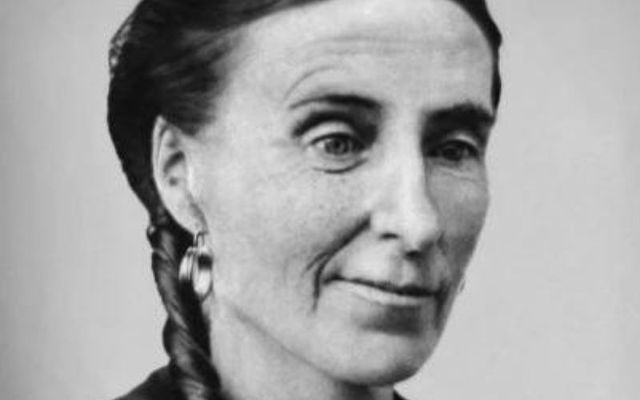
Frances Browne overcame blindness, poverty, and a childhood with no formal schooling to become one of the most respected voices in Victorian London’s literary world, yet her name has largely faded from memory. Among her many achievements was a children’s adaptation of Harriet Beecher Stowe’s “Uncle Tom’s Cabin,” a project that placed this Donegal-born writer at the heart of one of the 19th century’s greatest literary sensations.
Born in the small village of Stranorlar in County Donegal in January 1816, Frances Browne, the so-called ‘Blind Poetess of Ulster,’ overcame poverty, disability, and a lack of any formal education to become a fixture of the Victorian London literary scene, before fading into a long obscurity from which she has only recently been rescued.
An accomplished poet, novelist, and essayist, Browne, who lost her sight after a childhood bout of smallpox, is probably best known today for the patriotic verse “Songs of our Land.”
Unlike other Irish nationalists of the era (such as the controversial, Confederacy-supporting Young Irelander John Mitchel), Browne combined her commitment to the Irish cause with support for the oppressed the world over, be they Poles suffering under Russian oppression, Jews facing discrimination all over Europe, or Cherokees being massacred and forcibly displaced from their lands by Manifest Destiny-era US governments.
Browne was also a staunch opponent of US slavery. Her 1846 poem “The Land of the Slave’” was inspired by the great abolitionist Frederick Douglass’s visit to Belfast, an event that has recently been commemorated through the erection of a statue to Douglass on Rosemary Street in the centre of the city, near one of the chapels at which he spoke.
About a decade later, Browne published another anti-slavery poem, “I Would That There Were Many Such,” that portrayed, somewhat idealistically, a poor immigrant (the inference is that he is Irish) forgoing a large reward by refusing to divulge an escaping slave’s hiding place to his enslaver:
Yet not for all the dollars
That man may coin or see
Would I betray that flying slave
Thou evil man, to thee.
In the midst of the American Civil War, Browne returned to the topic of slavery in a short story called “An Experiment in the Peculiar Institution,” the ‘peculiar institution’ being the anodyne expression Southerners gave the enslavement of millions of African Americans.
Her first novel, meanwhile, “My Share of the World,” also written around this time, was partly concerned with the discomfort one of the main characters felt about their inherited wealth having been made in the slave trade; an unease shared by the present-day descendents of William Gladstone and other slavery-enriched British luminaries who are now expressing shame, offering apologies and, in some cases, seeking the means to make reparations.
Perhaps most notably, Browne was also the author (or ‘authoress’, as was the style of the time) of a children’s version of Harriet Beecher Stowe’s famous 1852 anti-slavery novel “Uncle Tom’s Cabin,” stating in the preface how it was “designed to adapt Mrs. Stowe’s touching narrative to the understanding of the youngest readers and to foster in their hearts a generous sympathy for the wronged negro race of America.” Titled “Uncle Tom’s Picture Book,” this short, 36-page work interspersed passages from Stowe’s novel with original poems of Browne’s that described some of the pivotal scenes from the book, such as “The Sale of Little Harry,” which reads in part:
The young child knew not what they said,
But at the open door
Eliza, his poor mother, stood,
With heart all sick and sore.
Oh children dear, ’twas sad to hear,
That for the trader’s gold,
To that hard-hearted evil man
Her own sweet boy was sold.
It seems likely Stowe approved of Browne’s adaptation, as it was released in America by her own publishers, having first come out in Britain.
And so, Browne, who would return to the world of children’s literature with the 1856 collection of fairy tales “Granny’s Wonderful Chair,” carved out her own small place in the cultural phenomenon that was “Uncle Tom’s Cabin,” the novel that was read aloud around innumerable 19th-century hearths and whose publication caused such a sensation that toy characters, playing cards, jigsaws, wallpaper and even crockery and cutlery inspired by its characters were quickly produced before being sold out in shops on both sides of the Atlantic.
Considered the first international bestseller written by an American, “Uncle Tom’s Cabin” counted Queen Victoria and Prince Albert amongst its legion of fans, the queen ensuring her private secretary arranged an ‘accidental’ meeting at King’s Cross railway station when Stowe visited London, the unusual venue allowing her to circumvent the diplomatic difficulties that would have stemmed from any official meeting with such a prominent abolitionist while the US still officially sanctioned slavery.
Although Browne never received a similar summons, she did manage to square her nationalist leanings with forging links with important politicians and aristocrats like Sir Robert Peel, Lord Lansdowne, and the Duchess of Sutherland (to whom “Uncle Tom’s Picture Book” was dedicated), their patronage facilitating her remarkable journey from a penurious postmaster’s house in the Finn Valley to the top table of literary London.
This article was submitted to the IrishCentral contributors network by a member of the global Irish community. To become an IrishCentral contributor click here.

This Week’s Question:
How Do I Research an Ancestor Who Worked in the Irish Linen Industry?
Hi Tom,
Each week we take a reader question and share suggested approaches, resources and a little historical context to help answer that question.
Do feel free to reply to this email and let me know if it helped you in any way, it’s always great to get feedback.
Today we answer the question:
How Do I Research an Ancestor Who Worked in the Irish Linen Industry?
Let’s kick off with the following question from Frances:
“Dear Mike, I have been told the linen trade is in my blood, and it seems to be true. My great-great-grandfather James Reid was a handloom linen weaver near Lurgan in County Armagh. He and his family left Ireland for Lowell, Massachusetts, sometime around 1888, and several members of the family later worked in the textile mills there. I would dearly love to understand James’s working life in Ireland, but I cannot find anything that looks like a record of a weaver. Was anything kept about ordinary linen workers at all, and how would I go about researching a life spent at the loom?”
Frances, Lowell, Massachusetts
Thank you, Frances. The linen trade really was woven through the lives of an enormous number of Ulster families, and the area around Lurgan was right at the heart of it. But be careful with your expectations as there is no great register of Irish linen workers. A handloom weaver such as James is much less likely to appear by name in surviving business records than the merchant or manufacturer who gave him the work.
But that does not mean his working life has disappeared. In fact, once you know that he was a handloom linen weaver, you have a very useful clue. Between civil and church records, land records, directories, newspapers and some sources peculiar to the linen industry, you can often reconstruct a surprising amount of the world in which he lived.
First, Work Out Exactly What Your Ancestor Did
The linen industry was not one job but a long chain of them. It began with the farmers who grew and pulled the flax. Then came the scutchers and hacklers who prepared the fibre, the spinners who turned it into yarn, and the weavers who made the cloth. After weaving came bleaching, beetling and finishing, while drapers, manufacturers and merchants organised the trade and sold Irish linen around the world.
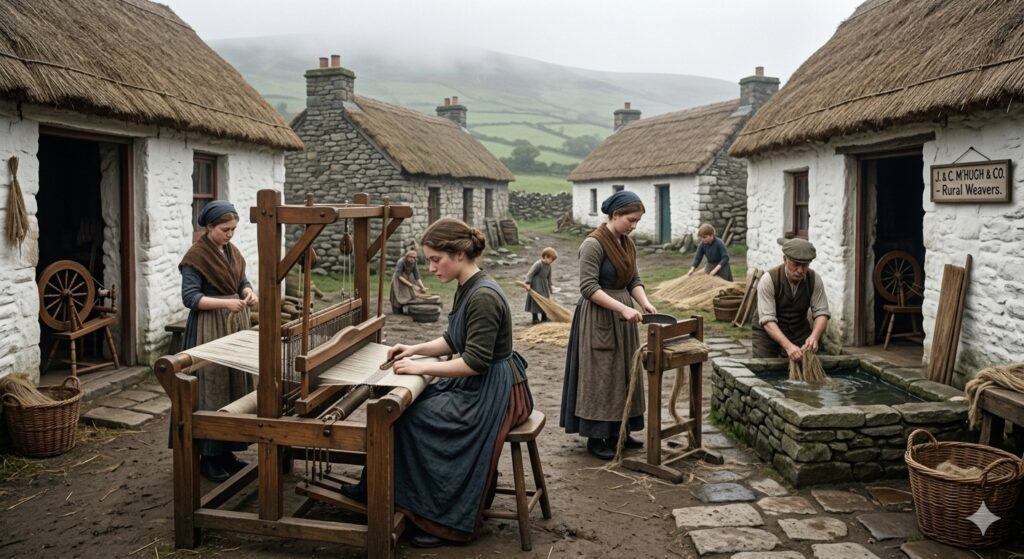
Picture was AI-generated by Tommy Mac
So the exact occupation written beside an ancestor’s name matters. In James’s case, “handloom weaver” is quite specific. In the later nineteenth century around Lurgan, a handloom weaver was still working on a manually operated loom, usually in his own home or in a small weaving shop. He might nevertheless be working for a large linen manufacturer who supplied the yarn and paid him for the cloth he produced. A “power loom weaver”, by contrast, worked in a mechanised weaving factory.
Other descriptions need more care. A record might simply say “linen weaver”, “weaver”, “cambric weaver” or “damask weaver”, and those terms do not necessarily tell you whether the loom was powered by hand or machinery. A flax spinner by James’s time was very likely working in a spinning mill, and the occupation was particularly associated with women and girls. Those little differences matter. Don’t improve or simplify the occupation when you put it into your family tree. Keep the wording the record actually gives you.
Start With the Last Irish Records You Can Find
This is where your James presents the problem familiar to so many people researching Irish ancestors: he had left Ireland before the surviving 1901 and 1911 censuses. So I would begin by working backwards from the family’s arrival in America and try to establish the latest definite sighting of James in Ireland.
Civil birth, marriage and death records can be extremely useful here. A marriage record may give James’s occupation and that of his father, while the birth registrations of his children can tell you whether he was still described as a weaver as late as the 1870s or 1880s.
For an Armagh family of this period, the free civil registration records at IrishGenealogy.ie are particularly useful. Although County Armagh is now in Northern Ireland, the IrishGenealogy.ie civil collection covers the whole island for the period before partition.
Do the same with church records. Around Lurgan you may be dealing with Church of Ireland, Presbyterian, Methodist or Roman Catholic families, and establishing the denomination can make a considerable difference to where you look next. That is one of the first things I would establish about James if you do not already know it.
Don’t Ignore the 1901 and 1911 Census Just Because James Had already left
James himself may be in Massachusetts by 1901, but his family and neighbours may still be sitting in the same County Armagh townland and that can be remarkably useful.
Look for brothers, sisters, cousins and married children who remained behind. Then look at their occupations. You may discover that James’s brother was still a handloom weaver in 1901 while his nieces were working as flax spinners or winders in a mill. Another relative may be recorded as a power loom weaver. Then widen the search to the neighbouring houses.
If a whole cluster of families around the old Reid home were working in linen, the census begins to show you the economic world from which James emigrated, even though James himself is no longer there. It is one of the reasons I would never treat the census simply as a search for one person. Sometimes the people who stayed behind tell you almost as much about the ancestor who left.
Find Where James and his family lived and worked
The next thing I would want to know is exactly where James lived. Griffith’s Valuation, carried out in County Armagh during the mid nineteenth century, can help identify the family holding or cottage and place it within a townland. But remember that Griffith’s does not normally give the occupation of an ordinary occupier. Finding a James Reid in a small house does not, by itself, prove that you have found your linen weaver.
For James’s period, the Valuation Revision Books at PRONI are even more useful. These continue the valuation records after Griffith’s and record changes in occupiers and properties over many decades. If you can identify the Reid cottage, you may be able to follow it through the period when James emigrated. You might see it pass to a brother, a son, another tenant or eventually disappear from the family’s hands.
Those changes rarely come with an explanation saying “went to America”, as you may imagine, but they can help narrow the period when something happened. Once you know the actual townland, you can begin asking better questions. How far was the nearest weaving factory? Was there a bleach works nearby? Which manufacturers operated in the district? Were the neighbouring households farming as well as weaving?
Follow the Manufacturer as Well as the Weaver
This is one of the peculiarities of researching a handloom weaver. James may have worked at a loom in his own cottage, but that does not necessarily mean he was an independent craftsman producing whatever he fancied. By the nineteenth century, many Ulster handloom weavers were tied into much larger manufacturing networks.
A manufacturer or linen merchant might supply the yarn, specify what was to be woven and pay the weaver for the finished piece. So although you are looking for James, it can be very worthwhile identifying the linen manufacturers operating around his townland.
Street and trade directories are useful here. They tend to name manufacturers, merchants, bleachers and mill owners rather than ordinary workers, but that is precisely why they can help. They tell you which businesses existed around Lurgan at the time James was weaving.
Then take those names to the Public Record Office of Northern Ireland. PRONI holds an enormous collection of records relating to the Ulster textile industry. Its catalogue, The Ulster Textile Industry 1690–1995, covers hundreds of textile businesses and includes material relating to spinning, weaving, bleaching, finishing and the commercial side of the trade.
Depending on the firm, surviving records can include ledgers, wage books, accounts, correspondence, production records and photographs. But I would say to keep your expectations realistic. These records were created to run businesses, not to help genealogists a century later. Some wage and staff books name ordinary workers; many company collections do not.
But even where James never appears by name, finding the records of the manufacturer for whom men in his district worked can tell you an enormous amount about how the trade operated.
A quick note.
My new book, Walk in Their Footsteps, is a complete guide to planning an Irish ancestral trip, making the most of your days once you’re there, and preserving what you find for those who come after you.
Walk in Their Footsteps: Your Ancestral Trip to Ireland
“Even if the reader has no opportunity to visit the island of ireland, reading ‘Footsteps’ will provide a richness of seeing Ireland by planning, joining and knowing a bit more of a unique adventure to find one’s Irish heritage.” – Bart
The launch price is $14.99 USD until Saturday, September 12th. After that, it becomes $29.99.
See the launch price offer
What Was Happening to James’s Trade?
This is where the timing of your family’s move becomes particularly interesting, Frances. You say James left Ireland around 1888, and he was doing so during a period of enormous change in the Ulster linen industry. Now, the linen industry itself wasn’t disappearing at the time, but the great mechanised linen industry of Belfast, Lurgan and the surrounding districts was expanding. So, what was under increasing pressure was James’s side of the business: handloom weaving.
Spinning had been mechanised much earlier in the century. Power weaving then expanded rapidly from the middle decades of the nineteenth century, and more and more cloth which once required a weaver sitting at a handloom could be produced by machinery in a factory. The handloom did not disappear overnight, but it survived in finer and more specialised forms of linen weaving, and there were still handloom weavers around Lurgan well into the twentieth century.
But for an ordinary family trying to make a living from the loom, the writing was on the wall. The modern factories were growing while the older domestic system was steadily losing ground. That means James’s occupation may be much more than a little detail on a certificate. It may also help explain what was happening to the family economically in the years before they left Ireland.
I would be careful not to turn that possibility into a fact – James may have left because his weaving income was falling. That was the push, but there may have also been a pull. He may equally have left because a brother or cousin was already in Massachusetts, because wages were better there, because somebody sent home the fare, or simply because he saw a better future for his children.
But once you know what was happening to handloom weaving around Lurgan, you have a very good question to investigate.
And Why Lowell?
The other side of your story is equally interesting. By the time the Reids arrived around 1888, Lowell had been one of America’s great textile cities for more than half a century. Tens of thousands of people worked in its mills, and Irish immigrants had been part of the city’s workforce since the first half of the nineteenth century.
There is one important difference, though. Lowell’s enormous factories were principally cotton mills, rather than the linen mills your family knew in Ulster. So I would not assume that James stepped off the boat and simply carried on doing the same job.
But he did move from one great textile district to another. A family accustomed to yarn, looms, piece work and the rhythms of textile production would have arrived in a city where factory work was plentiful and where Irish families had been settling for generations. An Ulster Protestant family would not have been as typical of Lowell’s nineteenth-century Irish population as the much larger Irish Catholic community, but neither would they have been especially unusual. There were Protestant and Presbyterian communities in Lowell and a much older tradition of Ulster Protestant settlement throughout Massachusetts and neighbouring New Hampshire.
What I would want to find next is the first American occupation for James and the rest of the family. Did James himself enter a mill? Did his sons and daughters do so while he found different work? Which company employed them? Were relatives already living in Lowell before 1888? The US census, city directories and Massachusetts vital records may begin answering those questions.
If you discover that another Reid from the same part of Armagh was already working in Lowell before James arrived, that may tell you far more about why the family chose Lowell than any general history of the linen industry ever could.
If You Want to Push the Linen Story Further Back
There is one special source worth knowing about if you eventually take the Reid family back into the eighteenth century. The 1796 Flax Growers’ Bounty List, sometimes called the Spinning Wheel Premium List, contains the names of around 56,000 people across Ireland who received spinning wheels or looms as premiums for growing flax.
The entries generally give a name, county and civil parish. But there is an important warning – finding a Reid on this list does not prove that he was a professional weaver, the scheme rewarded flax growing. But if you find the right family in the right Armagh parish, it may show that flax had already formed part of the family’s economy almost a century before James sat at his handloom. And that is when Frances’s remark about the linen trade being “in the blood” begins to get very interesting indeed.
So, if I were in your shoes, I would start by finding James’s last definite record in Ireland and keeping a careful note of every occupation attached to him. Then find the family home, look at the relatives who remained there in 1901 and 1911, and work out which linen businesses operated around them.
After that, I would cross the Atlantic and do exactly the same thing in Lowell.
Slán for now,
Mike
Useful Resources
Census of Ireland 1901 and 1911 – National Archives of Ireland
Best for: finding the relatives and neighbours who remained in Ireland after your ancestor emigrated, and seeing the occupations within a linen-working community.
IrishGenealogy.ie – Civil Records
Best for: free civil birth, marriage and death records for the whole island during the period relevant to a family leaving Ireland in the nineteenth century. Occupations recorded on these certificates can help follow a worker through the years before emigration.
Public Record Office of Northern Ireland – PRONI
Best for: the major collections relating to Ulster families, landholding, businesses and the linen industry.
PRONI Valuation Revision Books
Best for: following a house or holding after Griffith’s Valuation and seeing changes of occupier through the later nineteenth and early twentieth centuries.
The Ulster Textile Industry 1690–1995 – PRONI
Best for: finding surviving records of linen spinning, weaving, bleaching and manufacturing businesses.
PRONI Street Directories 1819–1900
Best for: identifying linen manufacturers, merchants, mills and other businesses operating in the district where your ancestor lived.
Griffith’s Valuation – Ask About Ireland
Best for: placing a family in a particular house, farm or townland during the middle of the nineteenth century.
1796 Flax Growers’ Bounty List – Ulster Historical Foundation
Best for: tracing families involved in flax growing in the late eighteenth century. An entry indicates involvement in flax production, not proof that the person was a professional spinner or weaver.
The Green Room – Your Irish Heritage
Best for: getting help applying these sources to your own family and comparing your research with others tracing ancestors from Ireland’s linen districts.
Already a Green Room Member? Click here to see this edition in the Green Room and ask our Genealogists your questions.
When you’re ready, here are ways we can help:
The Irish Family Genealogist Book : The complete collection of our newsletter content plus exclusive quick-start materials and cheatsheets in one searchable resource.
Join the Green Room : Join over 7,000 other friendly and helpful Irish Family History researchers in the Green Room today.
A fascinating interview from start to finish
with Folklorist & Writer Jo Kerrigan.
Click to watch. Click the speaker for sound. Click the back arrow to return

How Daniel O’Connell became Ireland’s Great Emancipator
and won Catholic rights
The Kerry-born lawyer built a mass movement that forced Westminster to grant Catholic Emancipation and briefly caught the attention of the wider abolitionist cause.

Nearly two centuries after his death, Daniel O’Connell remains one of the most celebrated figures to emerge from Ireland’s long struggle for equality. His mix of grassroots organizing and parliamentary defiance reshaped the relationship between Britain and Ireland, and his legacy still shadows the Dublin street that bears his name.
Daniel O’Connell is familiar to virtually everyone who travels through Dublin since O’Connell Street – the city’s main and most famous thoroughfare – is named after him.
He is predominantly remembered for his role in securing Catholic Emancipation in 1829, a series of reforms that removed restrictions on Roman Catholics living in the British Empire.
The restrictions had been introduced by the Act of Uniformity 1662, the Test Acts of the late 1600s, and the much-maligned Penal Laws of the 1600s, which stripped Catholics of a number of rights and sought to ensure the dominance of the Protestant class.
While some of these restrictions had been eased in the late 18th century, many still existed in the early 1800s, prompting O’Connell to form the Catholic Association in 1823 to broaden his campaign for Catholic Emancipation.
O’Connell charged a penny a month to join the association and drew the working-class poor into a national movement for the first time.
The Catholic Association proved extremely popular, and O’Connell was able to attract crowds of over 100,000 people at his rallies.
His popularity soared, and he carried him to a County Clare by-election victory in 1828, defeating a member of the British Cabinet in the process.
O’Connell became the first Catholic to win a seat in the British Parliament in more than 100 years.
However, as a Catholic, O’Connell was forbidden from taking his seat in Westminster under the Penal Laws.
O’Connell’s election led to the passage of the Roman Catholic Relief Act in 1829, which allowed Catholics to take their seats in Parliament whilst also removing the remaining Penal Laws and Test Acts that had kept Irish Catholics beaten down.
The Act, however, was not retroactive, and O’Connell was forced to run for election again to secure his seat. He ran in 1829 and won again in County Clare.
Historians argue that the passage of the Roman Catholic Relief Act was a seismic moment in the relationship between Britain and Ireland, undermining notions of the protestant ascendancy and shattering a whole social order.
O’Connell, however, is not simply remembered for his role in Catholic Emancipation.
The Irish politician and lawyer frequently called for a repeal of the Act of Union.
Introduced in 1800, the act created the United Kingdom of Great Britain and Ireland, and O’Connell called for the restoration of the Kingdom of Ireland, which had been introduced in 1782 and had enjoyed a Dublin-based parliament.
His campaigning laid the groundwork for the Home Rule compromise of the 1880s, and he addressed as many as one million followers at Clontarf and Tara in 1843 in his campaign for a Dublin-based legislature.
He was arrested and sentenced to 12 months in jail for conspiracy but was released three months later on appeal. He was paraded through Dublin on a gilded throne after his release, but his influence in the repeal movement diminished thereafter as he approached the final years of his life.
In 1845, two years before his death, O’Connell would have another major impact on a movement thousands of miles away.
Frederick Douglass, an American abolitionist and former slave, was touring the United Kingdom of Great Britain and Ireland in 1845 when he saw O’Connell speaking against slavery in Dublin. Douglass was captivated by O’Connell’s speech and told his fellow abolitionists back in the United States that O’Connell had demonstrated how to hold a “monster meeting” peaceably.
The famous American abolitionist said O’Connell’s speech was the most inspiring he had heard in over four years.
O’Connell had been a prominent abolitionist for the best part of two decades, first speaking out against slavery in 1829 when he held a large abolitionist meeting in London.
He frequently spoke about the matter in the British Parliament and denounced the United States as a “vile union” of “republicanism and slavery.” He once said he would never set foot on American shores due to the country’s ties to slavery.
O’Connell’s anti-slavery speeches frequently drew large crowds, who gathered to listen to him talk passionately about a subject that was clearly dear to his heart.
He never lived to see the abolition of slavery, dying on a pilgrimage to Rome in 1847.
*Originally published in 2020. Updated in 2026.
How a Norman knight’s bloodline
became one of Ireland’s most common surnames
The Burke surname and its many variants trace back nearly 900 years to a Norman conqueror, and today the family tree includes Galway castles, a beloved crooner and a notorious body snatcher.

Nearly nine centuries after William de Burgh landed in Ireland as a Norman knight, his descendants have grown into one of the country’s most numerous families, with roughly 19,000 Burkes living there today. Along the way the name has produced castle builders in Galway, a Riviera-crooning de Burgh, a president’s father and, more darkly, a killer whose surname became grim shorthand for murder.
Burke – If you bear one of these names, you could be a musician or politician.
Variants: Bourke, de Burgh, de Burca
This popular Irish surname has a number of variants, but those found in Ireland could be considered all descendants of William de Burgh, a Norman adventurer and a knight who settled in Ireland around 1160.
The de Burgh family had owned a small village in North Yorkshire for hundreds of years when King Henry II of England appointed him Governor of Limerick. He was eventually granted vast estates of land in Leinster, Munster, and Connacht, although his time in Ireland was riddled with battles, plots to overthrow, and conspiracies to kill as he set out to conquer Connacht.
The Annals of Four Masters record his death by stating: “William Burke plundered Connaught, as well as churches as territories; but God and saints took vengeance on him for that; for he died of a singular disease, too shameful to be described.” Today in Ireland, it is estimated that there are around 19,000 Burkes, and if counting the variant Bourke, it is within the top twenty most common surnames. So strong is the Burke presence in Ireland that they are thought to have built 121 castles in Galway and left at least 38 variations of the name behind!
Of these variations, there has been at least one more famous de Burgh, in the form of crooner Chris de Burgh, grandson of General Sir Eric de Burgh of Bargy Castle, County Wexford. The first female president of Ireland, Mary Robinson, hails from County Mayo and her father, who was a medical doctor, was a Bourke, while comedian Kathy Burke of Harry Enfield fame has Irish roots.
One more, rather sinister legacy of the Burke surname has become a term used by homicide detectives, thanks to the Irish criminal William Burke of the 18th and 19th centuries. After migrating to Scotland, Burke committed a number of brutal murders in Edinburgh and then sold bodies for medical experimentation. Since his method of choice was to get his victims drunk, then suffocate them, ‘burking’ was used as a term to describe a murder where little evidence of violence is apparent.
* Originally published in Aug 2016. Updated in 2026.
News From Ireland

Guinness heist mystery deepens
as trailers found 30 miles away after 800 barrels nicked
Police in the UK have launched an investigation after 800 barrels of stout were stolen from a depot in a daring Guinness heist.

It is understood that the thirsty burglars pulled up in lorries alongside two HGV trailers loaded with the black stuff, unloaded more than 800 barrels, and made off.
The trailers used in the theft have since been found in Skelmersdale, around 30 miles (48km) from where they were stolen, police said.
About 70,000 pints of Guinness, worth an estimated £115,000 (€133,887), were taken from Whitehouse Industrial Estate on Aston Lane in Runcorn on 31 August, Cheshire Police said.
One wagon-load was stolen at about 19:45 BST, with a second taken at around 21:30.
Authorities are now asking for witnesses and possible dashcam footage of the event to help them find out who was behind the film-like robbery.
They have stressed that anyone around the Aston Lane area of Runcorn, Cheshire on Monday the 31st of August may have witnessed the getaway lorry heading towards the Mersey Gateway at roughly 7:55 pm.
The trailers have been described as white tri-axle curtain-side trailers, decorated with GXO company logos on their curtains and rear doors. The two vehicles are both believed to have been driven by men.
Both trailers have now been recovered in Skelmersdale, Lancashire, although the stolen barrels have not yet been found and no arrests have been made, police said.
The barrels, which hold about 88 pints each and were destined for pubs, are still missing, with Lancashire Police appealing for anyone with information to come forward.
Speaking on the robbery, Detective Sergeant McClatchy stressed: ‘It is famously said that “Guinness is good for you”, but that is only the case when it has been bought and paid for.
‘It is with this in mind that we have wasted no time in launching inquiries to identify those responsible for the theft of £115,000 (€133,887) worth of Guinness and the two trailers that housed the barrels – we will settle for nothing less than the full recovery of all the items stolen.
‘We are now appealing to anyone who has any information in relation to the theft to please come forward and speak to officers,’ he continued.
The detective later added: ‘We would also ask any motorists who were driving in the area at the time of either of the incidents to please review any dashcam footage to see if you have captured anything that could aid our investigation.’
* This article was originally published on Extra.ie.
Irish citizenship rules face biggest overhaul in a generation
Immigrants seeking to become Irish citizens would face a longer residency requirement, mandatory language testing, and a new civics exam under sweeping proposals expected to reach Cabinet this week.

Justice Minister Jim O’Callaghan is preparing to ask the government to fast track a bill that supporters are calling the biggest shake up of Ireland’s naturalization process in decades. The changes would affect anyone applying for Irish citizenship through residency, not those claiming citizenship through Irish ancestry or descent.
Under the draft Irish Nationality and Citizenship (Amendment) Bill 2026, applicants would need eight years of reckonable residence in Ireland before they could apply for citizenship. That is a sharp jump from the five year requirement introduced only in late 2025, which itself had replaced a three year threshold. Applicants would need two years of continuous residence immediately before applying, plus six years within the previous decade.
Language and civics tests
For the first time, applicants would have to prove they can communicate proficiently in English, Irish, or Irish Sign Language. They would also need to show a working knowledge of Irish civics, covering how society, government, and the Constitution function. The justice minister would have discretion to waive the language requirement in cases involving vulnerable applicants.
Spouses and civil partners of Irish citizens would face tighter rules too. The required length of marriage or partnership before applying would rise from three years to five, and the applicant would need five years of Irish residency, including two years immediately before applying.
Finance and welfare
The legislation would also introduce income requirements tied to Central Statistics Office data on earnings, labor costs, and the cost of living. Applicants would need to show they are self-sufficient and not likely to become an unreasonable burden on the state.
Anyone receiving social welfare payments or housing supports at any point during the naturalization process would be barred from citizenship, and applicants could not have received such payments for two years before applying. A record of an immigration offense, before or during the application, would also disqualify a candidate.
Time spent in Ireland under the EU’s Temporary Protection Directive, the scheme that has sheltered tens of thousands of Ukrainians since 2022, would not count toward residency requirements for citizenship.
Ministerial powers
The bill would give the justice minister a distinct legal ground to revoke naturalized citizenship on public order and national security grounds, along with a faster process for carrying out revocations. Officials point to shifting security concerns across the EU as the reason behind the change.
Ireland’s Minister for Justice, Home Affairs and Migration, Jim O’Callaghan, is expected to seek Cabinet approval on Wednesday for priority drafting of the bill, publication of a draft outline, and referral to the Oireachtas (Parliamentary) justice committee for pre-legislative scrutiny.
The proposals arrive as O’Callaghan is also set to brief his Fianna Fáil colleagues at their pre-Dáil think-in in Tullamore on what the Irish Times reported he is calling a “firmer migration” policy. He is expected to point to a 39 percent drop in international protection applications since the EU’s migration pact took effect in Ireland in June, and the government has framed the citizenship changes as bringing Ireland’s naturalization system more in line with the rest of the EU.
The numbers show how central naturalization has become to Irish life in recent years. Nearly 235,000 people have become Irish citizens since 2021, including about 26,400 in 2025 alone. The most recent citizenship ceremony, held in Killarney in June, saw 4,600 new citizens from 139 countries take their oath.
For those who already hold citizenship through a parent or grandparent, these changes will not apply, since that process falls under separate rules for citizenship by descent. However, for the growing number of immigrants who call Ireland home, the path to an Irish passport is about to get considerably longer and more demanding.
What does it mean to be Irish in America right now?
A new study wants to hear from members of the Irish Diaspora across the New York metropolitan area, and IrishCentral readers can win a trip to Ireland just for filling out a short survey.

New York and Irish America at large have shown visible expressions of their Irish influence throughout the late 20th and early 21st centuries, but what does Irish identity actually feel like today, relative to the many other identities we carry as we live our lives?
That’s the question behind a new public survey, and organizers want to hear your voice. Submit your answers for a chance to win two return tickets to Ireland.
Complete our survey now:
This short survey explores Irishness and social identity across the greater New York area, examining the depth of individuals’ experiences of Irishness in everyday life. According to the U.S. Census Bureau, 31.5 million Americans claim Irish ancestry; however, less is known about the depth of engagement with that identity across the population or the relevance of its expressions in their daily lives.
We hope this study will provide an interesting layer of understanding of Irish identity in the New York metropolitan area today. Results and insights from this study will be published in IrishCentral, and further studies may follow.
The survey will only take a few minutes to complete, and here’s the fun part. Everyone who completes the survey will be entered into a drawing for a chance to win two round-trip tickets to Ireland. Picture it. A walk along the Cliffs of Moher, a football or hurling match, a visit to one of Ireland’s great arts festivals, a trip to see family or explore roots, or simply a pint or a cup of tea in a local pub or cafe. All it takes is a few minutes to answer some questions about your own sense of Irish identity.
New Yorkers always find ways to hold onto their roots while embracing something new, and this survey is a chance to put some of that lived experience on the record. It’s also a chance to help inform what Irish culture might look like for the next generation.
IrishCentral readers are known for their passion, their pride, and their willingness to show up. Now is the time to prove it again. Take a few minutes, share your story, and you might just find yourself booking a flight to Shannon sooner than you think.
The survey is open now to the public. Terms and conditions apply to the ticket giveaway.
Take part in our survey and be in with a chance to win!!
Investigation into suspicious package
at Shannon Airport ahead of Trump’s visit
Bomb disposal experts responded to reports of a suspicious package at Shannon Airport on August 25.
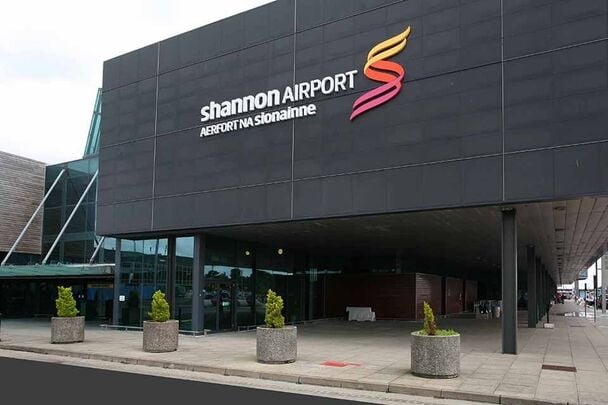
An Garda Síochána are investigating after a suspicious package was discovered at Shannon Airport in Co Clare, less than three weeks before US President Donald Trump is expected to arrive in Ireland.
Gardaí responded to a report of a suspicious package at Shannon Airport at about 10:30 am on Tuesday, August 25, a spokesperson for An Garda Síochána told IrishCentral on Thursday.
“Following a preliminary examination of the scene, the package was contained and removed to an alternate location which would not impact airport operations,” the spokesperson said.
“The Army Explosive Ordnance Disposal (EOD) team attended the scene.”
The spokesperson added: “Investigations are ongoing.”
According to The Journal, the package was addressed to US Customs. Shannon Airport has full US Pre-Clearance facilities where US-bound travelers can undertake all immigration, customs, and agriculture inspections before leaving Ireland. Personnel from US Customs and Border Protection (CBP) operate the Pre-Clearance facilities.
A spokesperson for the Irish Defence Forces separately told IrishCentral on Thursday that on August 25, “bomb disposal experts from the Defence Forces Explosive Ordnance Disposal (EOD) team responded to a request for assistance from An Garda Síochána in relation to a suspicious package at Shannon Airport.
“EOD personnel made safe the package and handed over the scene to An Garda Síochána.”
A spokesperson for the Shannon Airport Group told The Journal that it would not be commenting on the matter as it would be “inappropriate” to do so during an active Garda investigation.
The discovery of the suspicious package has come to light less than two days before US President Donald Trump is due to arrive in Ireland.
Trump is set to arrive at Dublin Airport on Saturday morning, where he is expected to be greeted by Tánaiste Simon Harris.
While it is not an official state visit, Trump will travel to Dublin’s Phoenix Park on a Marine One helicopter for a “brief courtesy visit” with President Catherine Connolly at Áras an Uachtaráin, followed by a meeting with Taoiseach Micheál Martin at Farmleigh House, and another engagement with US Ambassador Ed Walsh.
The trio of meetings has prompted the closure of Phoenix Park from 11 pm on Thursday, September 10 to 6 pm on Saturday, September 12 for “operational reasons.”

Trump will then travel to Co Clare, reportedly via Shannon Airport, to attend the Irish Open at his resort in Doonbeg.
He is then expected to leave Ireland, again via Shannon Airport, either late on Sunday or early on Monday.
The visit will see a massive security operation, as well as protests and demonstrations in both Dublin and Doonbeg.

Jokes
Tommy Mac here…
After my surgery….
My doctors told me to be very careful in the shower…
And to install a bar for safety….
So I did….
Click to view.
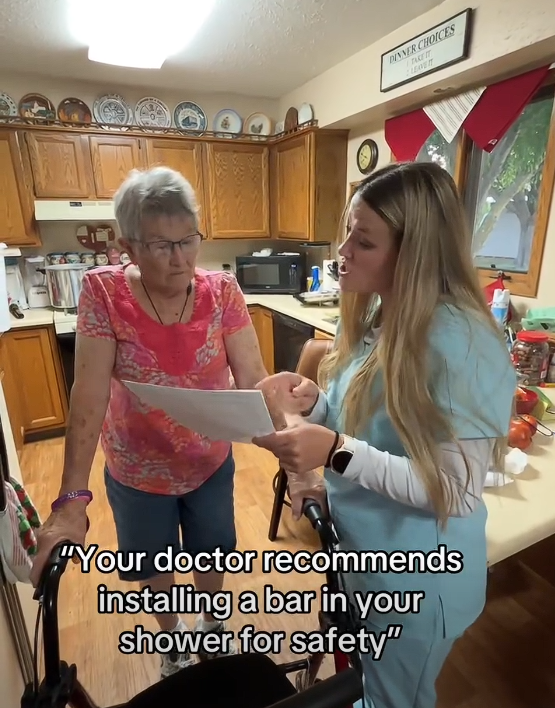
Click to watch. Click the speaker for sound. Click the back arrow to return
Funnies from my wife


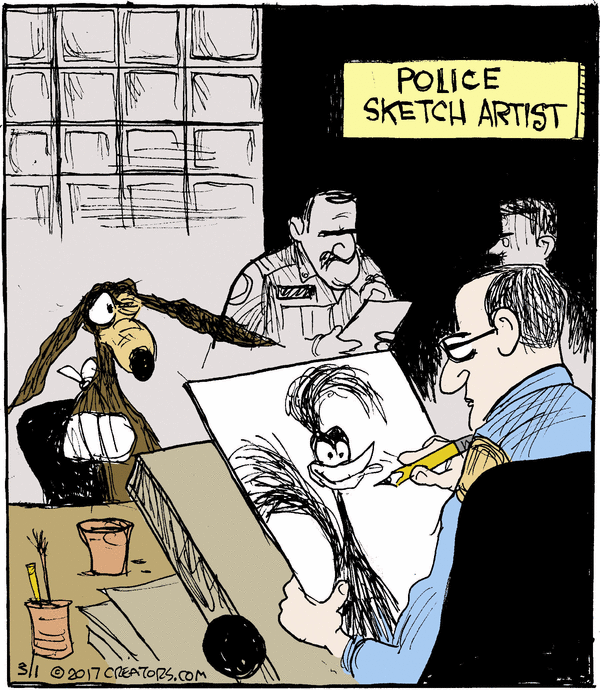
Funny Headlines
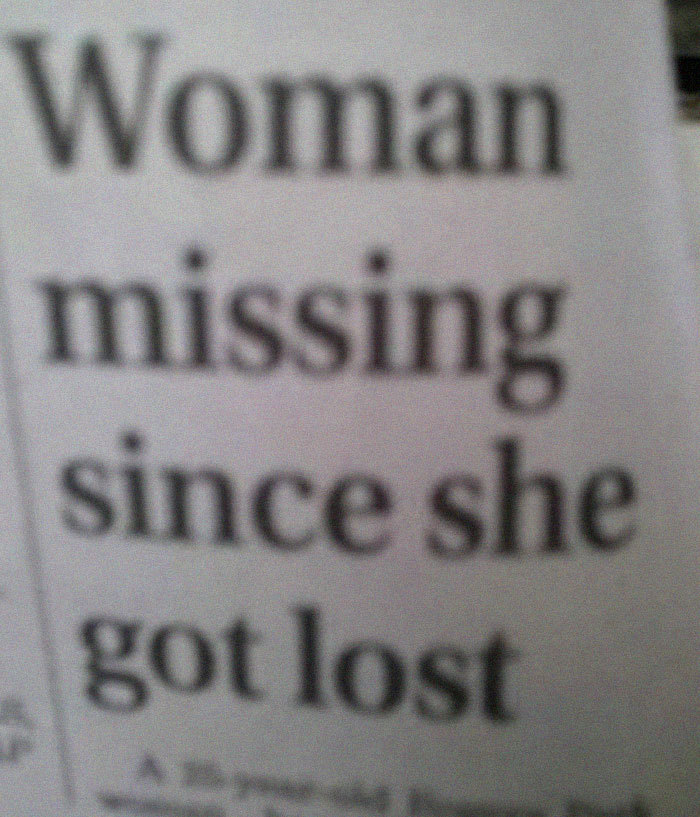
Times when you might be excused for using foul language

Spelling Errors
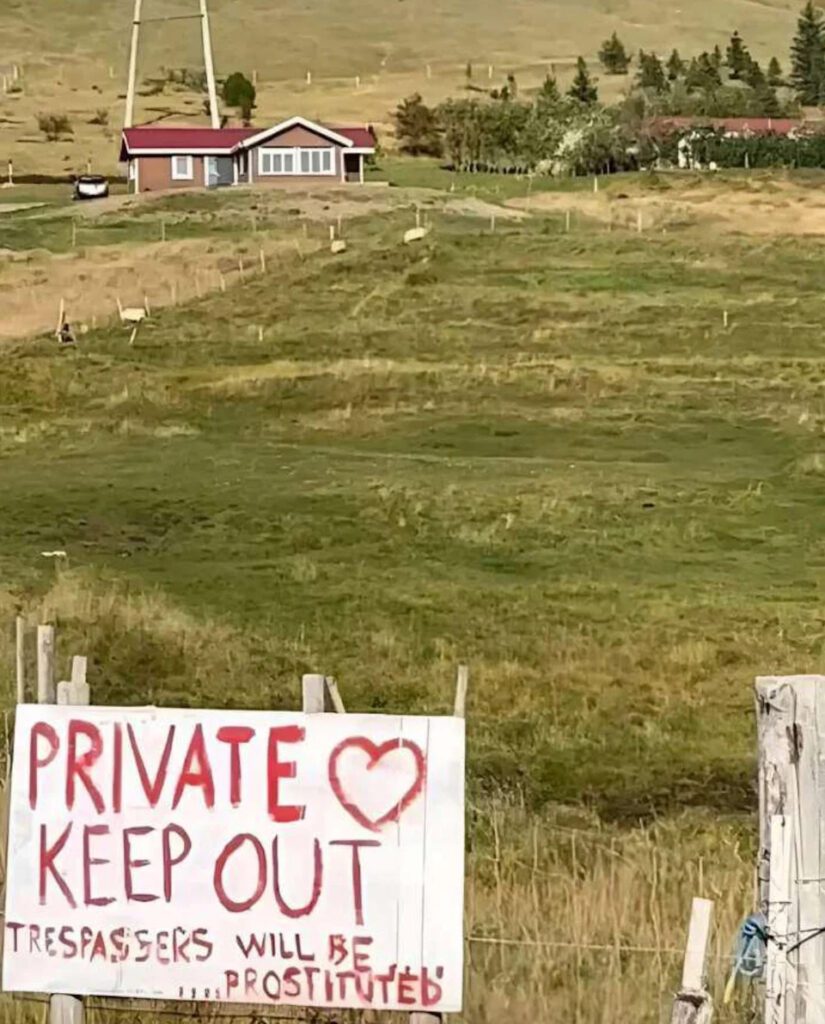
Funny Signs
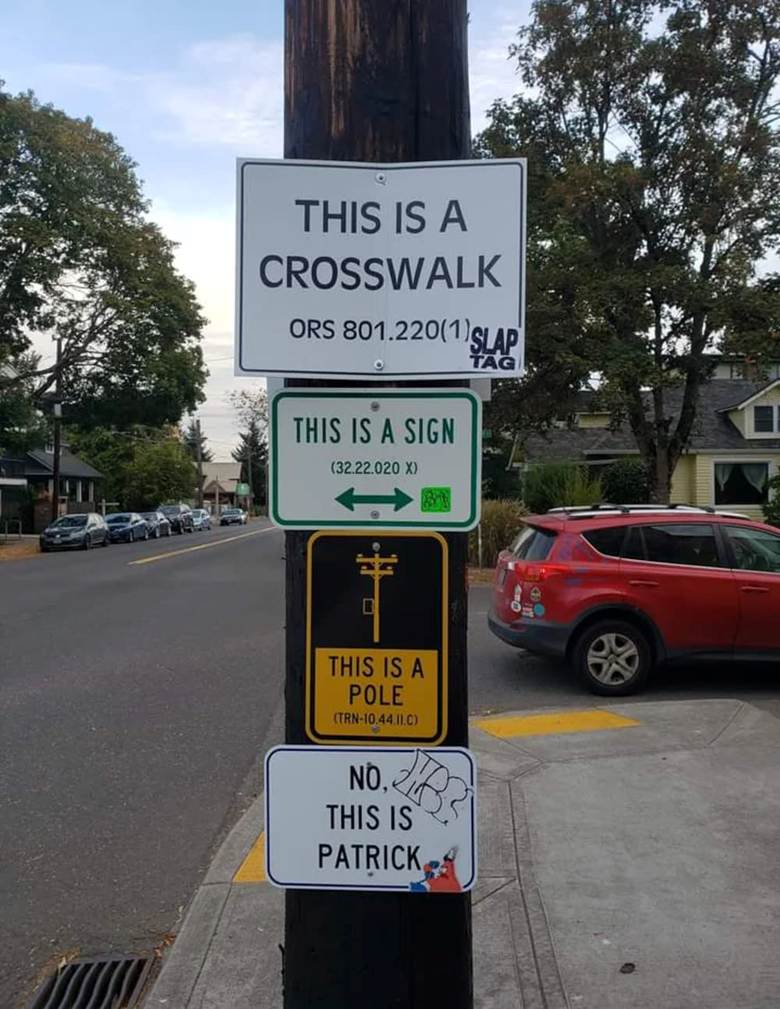
Good night to you all….Tommy Mac
Click below to watch…click the speaker for sound… after the video starts

Many news items, stories, recipes, jokes, and poems are taken from these sites
with their generous permission.
Please support them by clicking on the links below
and sign up for their free newsletter.



Welcome to
Tír na mBláth
Tír na mBláth is one of hundreds of branches throughout the world of Comhaltas Ceoltóirí Éireann (CCÉ) pronounced “kol-tus kyol-tori air-in“, the largest group involved in the preservation of Irish music, dance and song.
Our board and membership is made up of Irish, Irish descendants, and all those who support, celebrate and take pride in the preservation of Irish culture.
We also aim to promote good will and citizenship.
Interested in belonging to Tír na mBláth? Feel free to download our membership form
Facebook page is at Tír na mBláth
Our meetings and several events are held at Tim Finnegan’s Irish Pub in Delray Beach Florida.
Well, that's it for this week.
Slán abhaile
Pronunciation: slawn a-wol-ya
Meaning: Safe Home
—————————–
Go mbeire muid beo ar an am seo arís!
Pronounced – Guh merrimid byo egg on owm shuh a-reesh
Meaning: May we be alive to celebrate this time again!
Tommy Mac
Number of visitors to this website since Sept 2022